You can be in Williamsburg and still have a completely different living experience from one set of blocks to the next. That is part of what makes the neighborhood so compelling, but it can also make your search feel less straightforward. If you are trying to figure out where you fit, this guide will help you compare Williamsburg’s key micro-neighborhoods through the lens that matters most in real life: housing stock, street feel, commute patterns, and day-to-day lifestyle. Let’s dive in.
Why Williamsburg Feels So Different Block to Block
Williamsburg is not a single, uniform market. Brooklyn Community District 1’s neighborhood materials treat East Williamsburg, Northside, Southside, Williamsburg, and Greenpoint as relevant subareas, which helps explain why buyers and sellers often talk about the neighborhood in more specific terms.
That distinction matters because development has not happened evenly. Community Board 1 notes that luxury housing has expanded while transit and infrastructure have remained under strain, with the L, G, and J/M trains specifically flagged as overcrowded. In practice, that means many buyers judge Williamsburg not just by name, but by building type, subway access, and how each block feels to walk every day.
North Williamsburg at a Glance
North Williamsburg is the part of the neighborhood many people picture first. It offers the strongest mix of waterfront access, dense amenities, and newer residential product, with a streetscape that moves between loft conversions, row houses, mid-rise apartments, and larger waterfront towers.
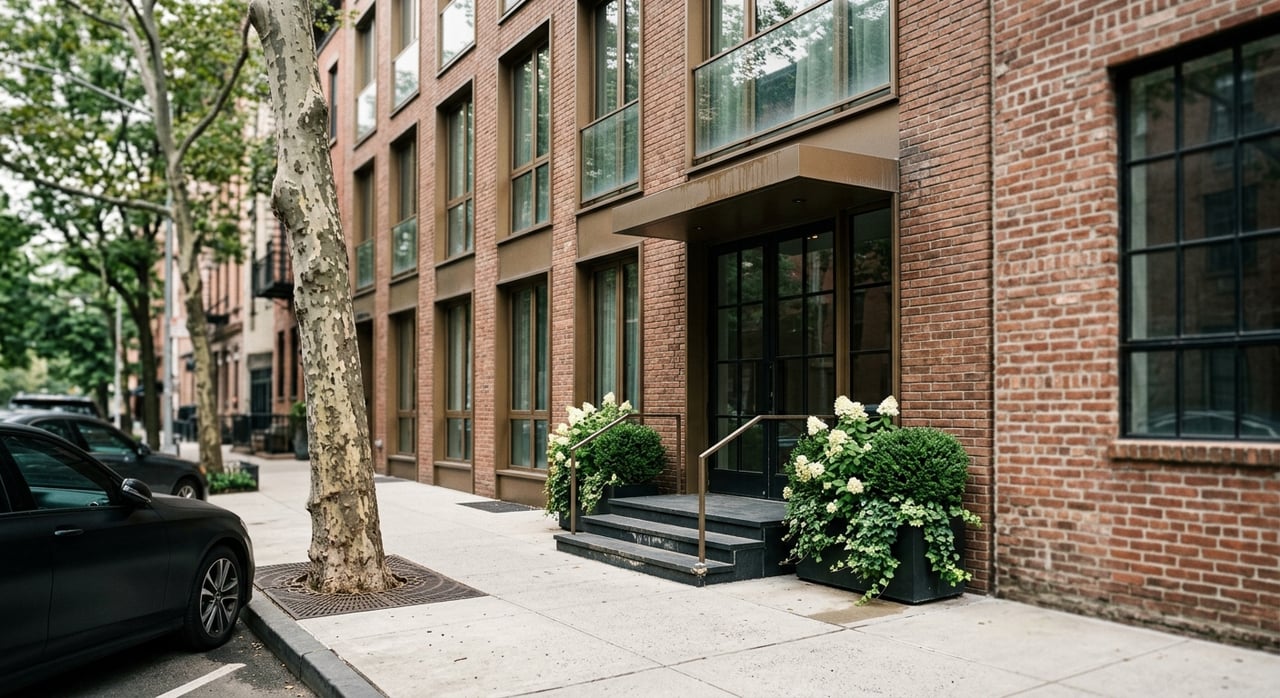
City planning materials describe the Northside upland area as a mix of converted industrial loft buildings and three- to four-story row houses, with newer apartment buildings on some blocks east of Kent Avenue. Along the waterfront, larger residential projects shape a more polished and modern profile.
What North Williamsburg Feels Like
North Williamsburg has one of the clearest visual identities in the area. Industrial streets often have long, continuous streetwalls, while many east-west residential streets feel more uniform and sidewalk-oriented.
Commercial activity is concentrated around Bedford Avenue and North 6th Street, with additional retail on North 7th, Berry, and Wythe. That creates an environment where restaurants, shops, and nightlife are woven tightly into daily life.
Housing in North Williamsburg
If you are drawn to newer condos, large amenity buildings, or waterfront residences, North Williamsburg is usually the first place to look. You will also find loft conversions and older row house stock, but the overall product mix skews more polished and amenity-heavy than other parts of Williamsburg.
For buyers, that often translates to a more turnkey search. For sellers, it means positioning matters. A waterfront condo and a loft conversion may both sit in North Williamsburg, but they still speak to different buyer priorities.
Parks, Waterfront, and Transit
North Williamsburg offers some of the area’s strongest waterfront access. Bushwick Inlet Park is a major feature of the Greenpoint-Williamsburg waterfront, and East River State Park provides river, skyline, and bridge views.
Transit is also a practical strength. The L train at Bedford Avenue and Lorimer Street serves the area, with additional access to the M, J, and Z at Marcy Avenue. The Lorimer Street and Metropolitan Avenue corridor also became ADA-accessible in 2024, which can be an important factor when comparing daily usability.
South Williamsburg at a Glance
South Williamsburg offers a different version of neighborhood life. It is still primarily residential, but it has a more layered built environment, a stronger bridge-adjacent identity, and a housing mix that often feels older and more varied than the Northside.
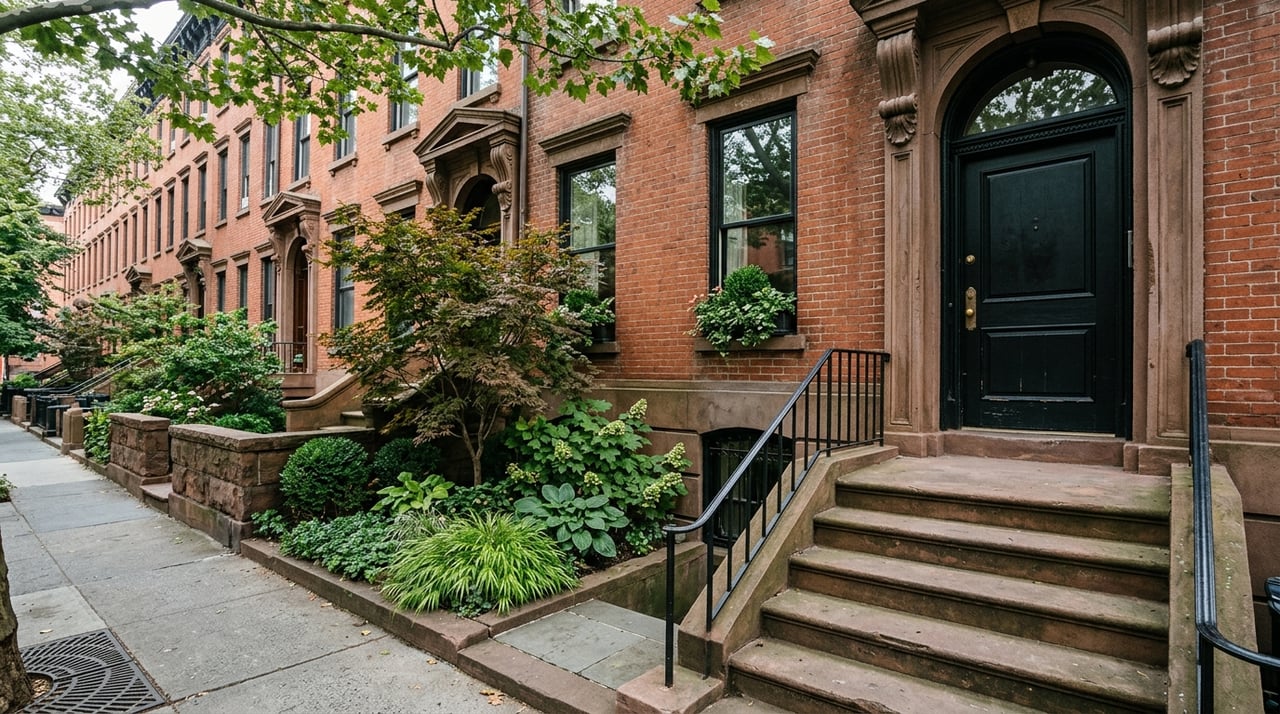
City planning describes this area as containing small attached houses, taller brick apartment buildings, and larger towers. Many east-west streets are lined with attached three- and four-story residential buildings, often in brick with stone or terra-cotta details.
What South Williamsburg Feels Like
South Williamsburg tends to feel more traditionally mixed-use. On Grand Street, planning documents describe a corridor of three- to four-story attached apartment buildings and row houses with ground-floor retail, mixed with a smaller number of six-story and lower commercial or industrial buildings.
That creates a more layered, lived-in street pattern. Rather than reading as waterfront-first, this part of Williamsburg often feels rooted in older commercial and residential fabric.
Housing in South Williamsburg
If you are looking for rowhouse pockets, older apartment buildings, or a lower-rise streetscape in many sections, South Williamsburg may feel like a better fit. The area’s housing stock is more visibly mixed, which can appeal to buyers who value texture and variety over a more uniform luxury product.
For sellers, this means the story of the property matters. A bridge-adjacent townhouse, a mixed-use building, and a larger apartment unit in South Williamsburg may all appeal to different audiences, even within the same broader neighborhood name.
History, Access, and Daily Rhythm
South Williamsburg also carries notable commercial history. The Dime Savings Bank of Williamsburgh at Havemeyer Street remains a prominent landmark near the foot of the Williamsburg Bridge and reinforces the area’s long-standing streetscape identity.
Transit access is broad and practical. The Grand Street rezoning materials note that the G, L, and J/M/Z subway lines all stop within six blocks of the rezoning area. Waterfront access is still part of the picture here as well, with the South Williamsburg ferry stop served on peak East River service and waterfront open space tied to the Domino-area redevelopment.
East Williamsburg at a Glance
East Williamsburg offers the most industrial and loft-oriented experience of the three. It is less defined by waterfront living and more shaped by warehouse blocks, adaptive reuse, and strong transit utility.
According to the North Brooklyn Industry and Innovation Plan, this area includes some of the most transit-accessible parts of the broader study area and has the greatest concentration of multi-story industrial loft buildings. It also includes a changing mix of artist studios, restaurants, office-based businesses, artisanal manufacturing, and other industrial uses.
What East Williamsburg Feels Like
East Williamsburg is less about one polished commercial spine and more about a patchwork of uses. Planning documents describe parts of the area as low-height industrial buildings and warehouses with high lot coverage, mixed with loft buildings, vacant lots, and parking lots.
That creates a very different visual experience from the waterfront blocks in North Williamsburg or the rowhouse-lined streets in South Williamsburg. It can feel more utilitarian, more creative, and more focused on adapted industrial space.
Housing in East Williamsburg
Residential options here are more limited and more specific in character. Planning materials note limited residential uses in historic rowhouses and converted industrial loft buildings, while parts of the Growth District do not allow new housing.
For buyers, that means East Williamsburg is often about finding a certain kind of space rather than shopping a broad menu of product types. If loft character, ceiling height, or an industrial backdrop matter more to you than waterfront proximity, this area may align well with your priorities.
Transit and Lifestyle Tradeoffs
East Williamsburg is especially strong for buyers who prioritize transit access. The L train serves the area through Lorimer, Graham, Grand, Montrose, Morgan, Jefferson, and DeKalb, while the G at Metropolitan/Lorimer remains an important connection point.
The MTA also announced accessibility upgrades at Metropolitan Avenue and Lorimer Street in 2024. That adds another practical advantage for buyers comparing how easy a location feels on a daily basis.
How to Choose the Right Fit
The easiest way to narrow Williamsburg is to start with how you want your day to feel, not just what you want your apartment or townhouse to look like. In this neighborhood, lifestyle and housing type are closely connected.
Here is a simple way to think about the three main micro-markets:
- North Williamsburg fits buyers who want waterfront access, newer condos, dense amenities, and a more polished day-to-day environment.
- South Williamsburg fits buyers who prefer older mixed-use blocks, rowhouse pockets, and a more layered residential fabric.
- East Williamsburg fits buyers who value loft character, creative-industrial surroundings, and transit access over waterfront proximity.
That same framework also helps sellers. Williamsburg is not one product category, and buyers do not evaluate every listing the same way. A loft conversion, a bridge-adjacent townhouse, and a waterfront condo each compete in different micro-markets with different expectations.
What This Means for Buyers and Sellers
If you are buying, the smartest move is to compare sub-neighborhoods with a clear set of priorities. Think about your commute, your preferred building style, the kind of commercial activity you want nearby, and whether waterfront access is a real priority or simply a nice extra.
If you are selling, precise positioning is critical. The strongest marketing strategy is not just about calling a property “Williamsburg.” It is about presenting it in a way that matches the block, the building form, and the buyer profile most likely to respond.
In a market this nuanced, local sub-neighborhood knowledge can shape everything from your search strategy to your pricing conversation. If you are considering a purchase, sale, rental, or development opportunity in Williamsburg, Nest Seekers Masters Division can help you evaluate where your property or next home fits best.
FAQs
What is the difference between North Williamsburg and South Williamsburg?
- North Williamsburg is generally more waterfront- and amenity-focused, while South Williamsburg has a more varied housing mix, older mixed-use blocks, and a stronger bridge-adjacent character.
What type of housing is common in East Williamsburg?
- East Williamsburg is known for industrial loft buildings, converted loft spaces, some historic rowhouses, and a more limited residential mix than other parts of Williamsburg.
Which Williamsburg area has the strongest waterfront access?
- North Williamsburg has the strongest waterfront presence, with access to parks, river views, and the North Williamsburg ferry landing.
Which Williamsburg area is best for loft-style living?
- East Williamsburg is the clearest match for buyers who want loft character, industrial architecture, and a more adaptive-reuse environment.
How should Williamsburg sellers position their property?
- Sellers should market their property according to its specific micro-neighborhood, building type, commute access, and lifestyle appeal rather than using Williamsburg as a single broad category.
Which transit lines serve Williamsburg micro-neighborhoods?
- Depending on the section, Williamsburg is served by the L, G, J, M, and Z trains, with ferry access available in North Williamsburg and South Williamsburg during peak East River service.