Wondering why some Hamptons homes feel magical in July but frustrating by November? In Suffolk County, a true year-round home has to handle winter cold, damp shoulder seasons, summer humidity, and coastal wear without making daily life feel complicated. If you are designing, renovating, buying, or repositioning a Hamptons property for full-time use, the smartest choices usually come down to comfort, resilience, and how well the home supports real routines. Let’s dive in.
Why year-round design matters in Suffolk County
Suffolk County is not a one-season environment. NYSERDA classifies the area as Climate Zone 4A, and NOAA data for Islip shows a real four-season pattern, with an average January temperature of 31.9°F, an average July temperature of 75.0°F, about 46.0 inches of annual precipitation, and about 31.8 inches of annual snowfall.
That climate changes the design brief. A Hamptons home that works beautifully year-round needs to perform on a gray, windy winter day just as well as it does during a summer weekend. The goal is not only style. It is a house that feels easy to live in every month of the year.
Start with daily-life layout
For many homeowners, year-round comfort begins with the floor plan. A seasonal house often prioritizes entertaining and indoor-outdoor flow, while a full-time home needs to support arrivals, storage, work, laundry, and quieter daily rhythms.
In practice, the most useful spaces are often the least glamorous. A well-planned entry, concealed storage, and a flexible room can make the home feel calmer and more functional in every season.
Create a real arrival zone
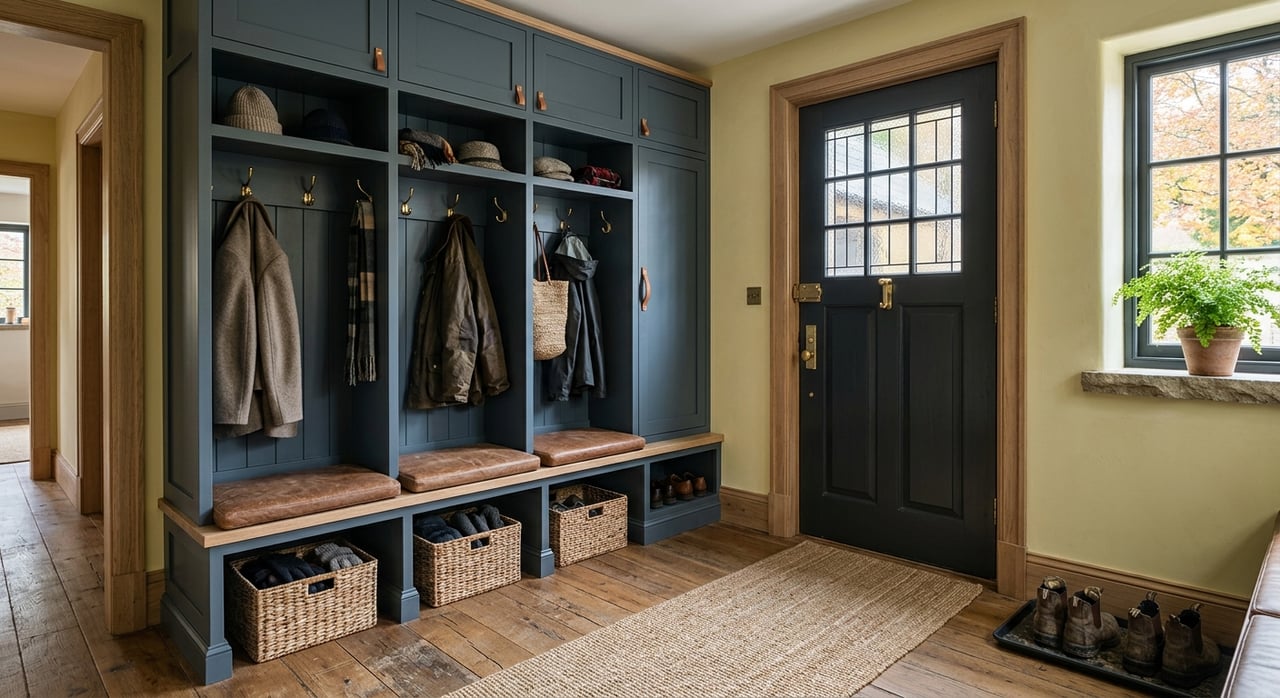
In a four-season coastal setting, the front entry does a lot of work. Wet coats, boots, umbrellas, bags, and deliveries all need a place to land without taking over the main living areas.
A defined transition space can help keep the rest of the home cleaner and more organized. Even in a luxury property, that kind of practical planning often has an outsized impact on how the house feels day to day.
Build in more storage than you think
Seasonal living can get away with lighter storage planning. Year-round living usually cannot.
Beach gear, winter outerwear, extra linens, pantry overflow, and off-season items need dedicated places so the home stays visually calm. Concealed storage is especially valuable in Hamptons homes where open, airy interiors are part of the appeal.
Add a flexible room
One of the smartest moves in a year-round Hamptons home is creating at least one room with multiple uses. Depending on your needs, that space might function as an office, den, library, media room, or guest suite.
This kind of flexibility matters because daily life changes over time. A room that can adapt gives the home more staying power and broadens its appeal if you ever decide to sell.
Prioritize comfort through the building envelope
A beautiful house will not feel luxurious if it is drafty, uneven in temperature, or hard to keep comfortable. That is why the building envelope matters so much in a four-season coastal property.
According to the U.S. Department of Energy, a tight, air-sealed home combines insulation with a continuous air barrier around the building envelope. That approach helps reduce drafts, cold spots, moisture issues, and even insects, while improving comfort, indoor air quality, and long-term durability.
Reduce drafts and cold spots
If you are designing or updating a Hamptons property for full-time use, envelope performance should be near the top of the list. It shapes how the home feels on a January morning and how efficiently it runs during the rest of the year.
For buyers, this is also a useful lens when touring homes. A polished finish palette is important, but year-round livability often depends just as much on how well the home is sealed and insulated.
Keep ducts in conditioned space when possible
The Department of Energy also notes that ducts in unconditioned spaces can waste heating and cooling energy. In many efficient homes, ducts are placed within conditioned space and kept sealed and insulated.
That detail may not be obvious at first glance, but it can affect both comfort and operating efficiency. In a luxury coastal home, hidden performance details often make the biggest difference over time.
Control moisture for healthier living
Moisture management is essential in the Hamptons. Between coastal humidity, damp shoulder seasons, and normal daily living, controlling indoor moisture is part of making a home feel clean, comfortable, and durable.
The EPA says mold is controlled by controlling moisture. It also notes that condensation on cold surfaces can encourage mold growth, and that bathrooms, kitchens, dryers, and other moisture-producing areas should be vented and managed with fans or dehumidifiers as needed.
Aim for balanced indoor humidity
The EPA recommends keeping indoor humidity below 60 percent, ideally between 30 and 50 percent. In a year-round Hamptons house, that makes ventilation and dehumidification practical essentials rather than luxury add-ons.
If a home feels clammy in summer or stale in the off-season, the issue is often less about décor and more about moisture control. Good planning can make the interior feel fresher, easier to maintain, and more consistently comfortable.
Choose finishes that handle real use
In a coastal setting, finishes should support everyday maintenance. Easy-to-clean surfaces and materials that hold up well to moisture can help preserve both appearance and function over time.
This matters even more in high-traffic areas like mudrooms, laundry rooms, baths, and pool-adjacent spaces. The best year-round homes are designed for beautiful living, but also for easy living.
Design for coastal durability
Living near the water brings obvious benefits, but it also puts more stress on exterior materials. Salt spray and humidity can accelerate corrosion, especially on metal components.
FEMA’s coastal construction guidance recommends corrosion-resistant hardware in coastal areas because salt air and humidity can wear down metal fasteners and connectors more quickly. For a Hamptons property, that makes exterior detailing and material selection a long-term design decision, not just an aesthetic one.
Think beyond curb appeal
A coastal home should look refined, but it also needs to age well. Hardware, connectors, and other exposed or semi-exposed elements should be selected with the environment in mind.
That is especially relevant the closer a property is to the shoreline. Buyers and owners who plan for coastal wear early can often reduce maintenance headaches later.
Know when flood exposure changes the conversation
In Suffolk County, flood risk is not a side issue. The county identifies coastal flooding, storm surge, nor'easters, and flash flooding as relevant hazards, and its floodplain management materials note that about 72,107 acres are mapped within floodplains.
The county also explains that Special Flood Hazard Areas have a 1 percent or greater annual chance of flooding, while coastal V zones are hazard areas with wave run-up and storm surge. With 980 miles of coastline and long-term concerns around sea-level rise and coastal erosion, resilience has to be part of the design conversation in many Hamptons settings.
Check flood mapping early
If you are evaluating a property, one of the first practical questions is whether the home sits in a mapped flood zone. FEMA’s Flood Map Service Center is the official online place to check flood hazard products.
That early check can shape renovation scope, carrying costs, and design priorities. It is much better to understand flood context upfront than to discover it late in the process.
Protect critical systems
For homes in flood-prone areas, Suffolk County guidance says to elevate the furnace, water heater, and electric panel. In coastal V zones, structures may need to be elevated on pilings, columns, or shear walls.
These are not small details. They can influence layout, utility placement, and even how the home meets the site. In many cases, resilience choices are directly tied to year-round comfort and peace of mind.
Focus on the features that reduce friction
When people imagine a Hamptons home, they often picture outdoor entertaining, natural light, and summer ease. Those elements still matter, but full-time living usually comes down to reducing small daily frustrations.
The homes that live best year-round tend to handle bad weather, deliveries, workdays, laundry, storage, and moisture with very little drama. That kind of ease is what makes a property feel truly elevated in every season.
Most useful year-round features
Here are some of the features that often matter most in a four-season Hamptons home:
- A defined entry or mudroom for coats, boots, and bags
- Concealed storage for beach gear and seasonal items
- A functional laundry or utility room
- At least one flexible room for office, den, or guests
- Strong air sealing and insulation for consistent comfort
- Sealed, insulated ducts located in conditioned space when possible
- Ventilation and dehumidification that help manage indoor moisture
- Durable, easy-to-clean finishes in high-use areas
- Corrosion-resistant exterior hardware in coastal locations
- Elevated mechanical and electrical systems where flood exposure is a concern
A smarter way to evaluate Hamptons homes
If you are buying or renovating in Suffolk County, it helps to look past the summer lifestyle story and ask how the property performs in February, April, and during a humid stretch in August. That is often where the real quality of the home reveals itself.
A well-designed year-round house supports both the experience of living there and the long-term value of the asset. In the Hamptons, that balance of beauty, performance, and resilience is what turns a seasonal retreat into an effortless full-time home.
If you are considering a Hamptons purchase, preparing a property for sale, or evaluating how to position a home for today’s discerning buyers, Nest Seekers Masters Division can help you approach the opportunity with market insight, discretion, and a tailored strategy.
FAQs
What makes a Hamptons home work for year-round living?
- A year-round Hamptons home usually combines a practical layout, strong insulation and air sealing, moisture control, flexible living space, and coastal durability features that support comfort in every season.
Why does Suffolk County climate matter in Hamptons home design?
- Suffolk County has a true four-season climate, with winter cold, summer humidity, annual precipitation, and snowfall, so homes need to perform well beyond the peak summer months.
How important is layout versus mechanical systems in a Hamptons house?
- Both matter, but they do different jobs: layout reduces daily friction through storage, entry planning, and flexible rooms, while systems and envelope performance support comfort, efficiency, and moisture control.
How can you check if a Hamptons property is in a flood zone?
- The official place to review flood hazard products is FEMA’s Flood Map Service Center, which can help you determine whether a property is in a mapped flood zone.
What flood-resilience features matter in Suffolk County homes?
- Suffolk County guidance highlights elevating key systems such as the furnace, water heater, and electric panel, and notes that homes in coastal V zones may need structural elevation on pilings, columns, or shear walls.
Why is moisture control important in a year-round coastal home?
- Moisture control helps reduce condensation and mold risk, supports indoor comfort, and can make the home easier to maintain, especially in humid and damp conditions common in coastal Suffolk County.
What materials are better for coastal Hamptons properties?
- In coastal settings, corrosion-resistant hardware and durable exterior detailing are especially important because salt spray and humidity can accelerate wear on metal fasteners and connectors.