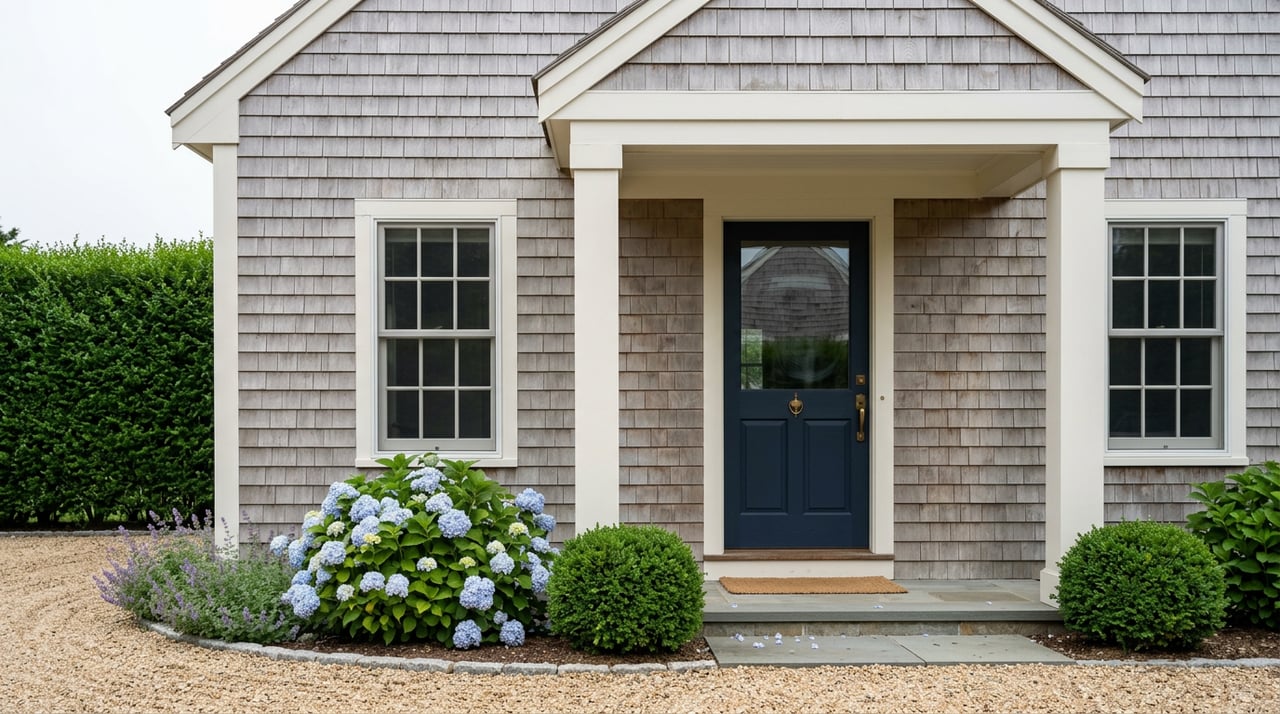
A buyer signs a contract on a $2.3 million shingle-style on the South Fork. Two weeks in, three separate line items surface that were not in the pro forma: a Peconic Bay transfer tax with no allowance, a Suffolk County septic upgrade triggered by the renovation scope, and a wetland setback that eats into where the pool was supposed to go. None of this is exotic. What has changed is who it happens to.
The Hamptons transaction-cost story used to be a top-of-market problem. In 2026 it is a middle-market problem, and that shift is the single most useful thing a buyer can hold in mind before signing.
The middle market inherited the friction
For years, the deals big enough to trigger the Peconic tax cliff, the I/A septic mandate, and a Natural Resources Special Permit were concentrated in the highest tranches. That is no longer the composition of the market. In Q2 2026, Miller Samuel and Streetmatrix reported that deals between $1 million and $5 million accounted for roughly 68% of the 1,200 Hamptons transactions closed, a departure from prior quarters when the top tranches led. Total Hamptons volume was down about 10% year over year. The trailing three-month median through May sat at $1.6 million with 125 days on market, up from 86 days a year earlier.
Set that against the Q4 2025 record median of $2.34 million reported by Douglas Elliman and Miller Samuel, and the picture sharpens. The high end is still setting records, but the volume this year is being done by buyers landing squarely on top of every threshold the East End's regulatory apparatus was designed to catch.
Three thresholds matter. Miss any one and the closing arithmetic changes.
The Peconic tax has a cliff at $2 million
The Peconic Bay Region Community Preservation Fund transfer tax is not new. What is new for many buyers is the rate and the allowance structure. Since April 1, 2023, the rate has been 2.5% in East Hampton, Shelter Island, Southampton, and Southold, which includes a 0.5% Community Housing Fund add-on that voters in those four towns approved in 2022. Riverhead remains at 2%.
The allowance is where the friction hides. For improved primary residences in the four 2.5% towns, the first $400,000 of the purchase price is exempt, but only where consideration is $2 million or less. On a conveyance above $2 million, the allowance is eliminated entirely and the tax applies from dollar one.
A worked example, using the current 2.5% rate in Southampton:
$1,950,000 improved residence: 2.5% of ($1,950,000 − $400,000) = $38,750
$2,050,000 improved residence: 2.5% of $2,050,000 = $51,250
An extra $100,000 of purchase price triggers an extra $12,500 of transfer tax because the allowance disappears.
The tax is customarily paid by the buyer, filed with the deed at the Suffolk County Clerk's Office, and if unpaid at closing it becomes a lien against the property. Structuring an offer at $1.99 million versus $2.05 million is not a rounding decision.
Full statutory text lives in Article 31-D, Section 1449-bb of the New York Tax Law, and the Southampton Community Preservation office publishes the current allowance schedule and first-time buyer application.
The renovation math that trips the septic rule
Suffolk County effectively closed the cesspool loophole in 2019. As of July 1, 2021, Innovative and Alternative Onsite Wastewater Treatment Systems are required for all new single-family construction and for any project classified as "major reconstruction." Major reconstruction has a specific definition worth memorizing before a buyer signs a contract on a house they plan to open up: any renovation where the cost exceeds 50% of the structure's market value.
The dollar figures are meaningful. Suffolk County Principal Environmental Analyst Julia Priolo told 27east in April 2026 that installation of an I/A septic system typically runs about $36,500 in East End towns, before design and repair costs that can push it higher. Roughly 7,500 I/A systems are now installed county-wide, against a legacy stock of about 250,000 cesspools and 110,000 conventional septics, so most Hamptons resales are still being handed off with older systems in the ground.
Offsets exist and they stack. Suffolk County offers a $20,000 grant combined with $25,000 from New York State, and East Hampton and Southampton add town-level CPF rebates ranging from $15,000 to $25,000 depending on location. The 27east reporting notes that East Hampton and Southampton have already funded over 900 and over 1,200 installations respectively.
The friction points that surface in a real transaction:
- Buyer plans a renovation whose scope, once bids come in, crosses the 50% threshold and triggers a mandatory I/A upgrade the seller was not going to make.
- Existing cesspool is functioning and technically may stay, but the buyer's lender, particularly on FHA or VA loans, imposes its own septic condition.
- Contract does not specify who pays for the I/A install, what system type, and what happens if the county's approval timeline slips past the closing date.
- Southampton's Town Code Chapter 123 mandates I/A within the High Priority Area of the CPF Water Quality Improvement Project Plan, which pulls certain parcels into the requirement regardless of scope.
The straightforward move is to price the I/A install into the offer or the credit, assign the grant paperwork explicitly, and confirm which WQIPP zone the parcel sits in before the contract is signed rather than after.
The wetland line that no listing photo shows
East Hampton's Planning Department has said that approximately 75% of applications contain a Natural Resources Special Permit component, meaning the work sits within 150 feet of a regulated wetland. That is not a fringe statistic. It is the base rate.
The setbacks are stringent. East Hampton Town Code prohibits construction within a wetland outright, and no sewage disposal device may be installed within 150 feet of the upland wetland boundary. The Harbor Protection Overlay District layers additional stormwater and septic requirements over parcels near Georgica Pond, Wainscott Pond, Three Mile Harbor, and similar water bodies. On coastal parcels, the New York State DEC's Coastal Erosion Hazard Area line further restricts where permanent structures can go, and that line is periodically remapped.
The current teachable case is Misiurski v. East Hampton ZBA, filed in 2026. On a 40-foot-wide, roughly 6,000-square-foot lot in Beach Hampton, Amagansett, the owner sought six variances to build a 966-square-foot house with a nitrogen-reducing septic. The proposed setbacks were 3 feet from the wetlands for the house and 37 feet for the septic, against the 100-foot and 150-foot standards. Half the lot is wetlands. FEMA elevation requirements added another 5 feet of height, which triggered pyramid-law issues. The ZBA denied. The owner argues the denial rendered the lot effectively worthless.
A buyer touring that property in July would see trees, sky, and an ocean walk. What they would not see is that the buildable envelope may be zero.
What to verify before the offer
Bottom-funnel homework, in order of consequence:
- A survey with wetlands, tidal boundary, CEHA line, dunes, and bluff crest depicted, not just lot lines. If the parcel is anywhere near water, order this before the offer, not before the closing.
- Confirmation of which town, village, and overlay district (Harbor Protection, Water Recharge, Flood Hazard) the parcel sits in and what WQIPP priority tier applies for septic purposes.
- A written record of the septic system type, age, last pump-out, and any SCDHS filings, plus a scope conversation about whether the planned renovation crosses the 50% market-value line.
- Open building permits and certificates of occupancy for every accessory structure. Unpermitted pool houses, sheds, and converted guest quarters routinely surface in the days before closing.
- A closing cost sheet that models the Peconic tax at the actual purchase price, the 1% New York State mansion tax where consideration is $1 million or more, and any I/A upgrade cost net of stacked grants.
FAQ
Does the Peconic tax apply if I buy a Hamptons home through an LLC? The tax applies to conveyances regardless of grantee type. Certain transfers, including mere changes of identity of ownership where beneficial ownership does not change, are exempted under Schedule C of the Peconic Bay Region Community Preservation Fund form. Confirm structure with counsel before signing.
Can a functioning cesspool stay in place after a Hamptons sale? Yes, in most cases. Suffolk County does not mandate cesspool replacement on sale. Replacement is triggered by failure, by new construction, or by major reconstruction where cost exceeds 50% of market value. Lender requirements and contract negotiation are usually the operative constraint, not the county rule itself.
How far in advance should a survey and feasibility read happen? For any parcel near water, before the offer. A wetland delineation and buildable-envelope study takes a few weeks and costs a fraction of the deposit at risk if the program the buyer has in mind will not fit inside the setbacks.
The Hamptons market in 2026 is rewarding buyers who treat due diligence as a pre-offer discipline rather than a pre-closing scramble. For a private consultation on a specific parcel, contract, or renovation plan on the East End, contact Bianca D'Alessio and the Nest Seekers Masters Division to request a private consultation.